Introduction
Helicobacter pylori (H. pylori), first identified by Warren and Marshall in 1983 [1], is now well established as a major etiological agent in a wide range of gastric disorders, including chronic gastritis, peptic ulcer disease, gastric adenocarcinoma, and mucosa-associated lymphoid tissue (MALT) lymphoma [2-4]. The infection is typically acquired during childhood, particularly in developing countries, where adult seroprevalence may approach 80% [5]. Although many infected individuals remain asymptomatic, histological evidence of chronic gastritis is almost universally present [6].
Approximately one-sixth of infected individuals develop peptic ulcer disease [7], and epidemiological studies have demonstrated a two- to six-fold increased risk of gastric adenocarcinoma in H. pylori–infected populations [8]. In addition, H. pylori plays a central role in the pathogenesis of gastric MALT lymphoma, with regression reported following successful eradication therapy [9,10].
Given its strong association with both benign and malignant gastric conditions, early detection and appropriate management of H. pylori infection are crucial to reducing gastric cancer burden [11]. Histopathological examination of gastric biopsies remains the diagnostic gold standard, allowing direct visualization of the organism and assessment of the associated mucosal inflammatory response. The Updated Sydney System provides a standardized and reproducible method for grading key histological features, including chronic inflammation, neutrophilic activity, glandular atrophy, and intestinal metaplasia [12].
The present study was undertaken to systematically describe and grade the histopathological changes associated with H. pylori infection in gastric mucosal biopsies using the Updated Sydney System, thereby delineating the morphological spectrum and severity of H. pylori–induced mucosal injury.
Materials and Methods
The descriptive study was carried out in the Department of Pathology, Government Medical College, Thiruvananthapuram, over a one-year period from March 2014 to February 2015. A total of 78 gastric mucosal biopsies were included. Biopsies with adequate tissue and well-preserved gastric mucosa were included, while poorly preserved or inadequate samples were excluded. H. pylori–negative biopsies were included as a comparison group.
Routine Hematoxylin and Eosin–stained sections were evaluated for chronic inflammatory infiltrate, polymorphonuclear neutrophil activity, glandular atrophy, and intestinal metaplasia. The presence of H. pylori was confirmed using Modified Giemsa stain. Histopathological parameters were graded according to the Updated Sydney System. Additional features such as lymphoid follicle formation and epithelial dysplasia were recorded but not graded.
Quantitative data were expressed as absolute numbers and percentages. Graded histopathological parameters, including chronic inflammation, neutrophilic activity, glandular atrophy, and intestinal metaplasia, were presented as frequency distributions across mild, moderate, and marked categories according to the Updated Sydney System. Categorical variables were analyzed using the Chi-square or Fisher’s exact test, as appropriate using ‘R’ software, and a p-value < 0.05 was considered statistically significant. All photomicrographs are presented at higher digital resolution, with standardized scale bars (10 μm) added to ensure consistent magnification and clarity across panels.
Results
Of the 78 gastric mucosal biopsies examined, 60 were from male and 18 from female patients, with ages ranging from 26 to 69 years (mean = 47.38 years). Helicobacter pylori was detected in 43 cases (55.1%), while 35 cases (44.9%) were negative. The distribution of H. pylori positivity was higher among males (58.3%) than females (44.4%) (Table 1, Figure 1).
Among H. pylori-positive biopsies, duodenal ulcer was the most frequent clinical diagnosis (46.5%), followed by gastric ulcer (23.3%), chronic gastritis (23.3%), and gastric carcinoma (6.9%) (Table 2). Histopathological findings in H. pylori–positive cases demonstrated a broad morphological spectrum (Figure 2). Spiral-shaped H. pylori organisms were observed adherent to the gastric crypt epithelium and surface mucus in Modified Giemsa–stained sections (Figure 2a-b).
Mild chronic inflammation characterized by lymphoplasmacytic infiltration of the lamina propria without epithelial injury was noted in early lesions (Figure 2c). Moderate chronic inflammation, with denser inflammatory infiltrate and focal epithelial damage, was more common (Figure 2d). Prominent lymphoid follicles with germinal centers were a frequent finding, reflecting H. pylori–induced mucosal immune response (Figure 2e).
Eosinophilic infiltration, representing a mixed inflammatory pattern, was occasionally observed (Figure 2f). Diffuse lymphoplasmacytic infiltration involving plasma cells and lymphocytes was seen in cases with preserved mucosal architecture (Figure 2g). Intraepithelial neutrophils, indicative of active gastritis, were frequently present (Figure 2h), while focal collections of neutrophils within glands (pit abscesses) were also identified (Figure 2i).
Intestinal metaplasia, evident by the replacement of gastric foveolar cells with absorptive and goblet cells showing basophilic cytoplasm, was observed in 19 cases (44.2%) (Figure 2j). Surface epithelial erosion and mild dysplasia were identified in a subset of chronic cases (Figure 2k). Moderately differentiated intestinal-type adenocarcinoma with glandular architecture and pleomorphic nuclei was observed in 3 cases (6.9%) (Figure 2l).
Quantitative analysis according to the Updated Sydney System revealed that all H. pylori–positive biopsies showed chronic inflammation, with 44.2% moderate and 23.2% marked grades. Neutrophilic activity was similarly present in all positive cases, predominantly moderate to marked. Intestinal metaplasia occurred in 44.2% of cases, while mucosal atrophy was infrequent (11.6%) (Table 3). Significant statistical associations were found between H. pylori infection and chronic inflammation, neutrophilic activity, and intestinal metaplasia (p < 0.05), but not with mucosal atrophy (p > 0.05).
Figure 2 presents the histopathological spectrum of H. pylori–associated gastric mucosal changes (H&E and Modified Giemsa stains). Each subfigure (a-l) corresponds to specific morphological findings as described above.
Table 1: Gender-wise distribution of H. pylori
| Gender | Total Cases (n = 78) | H. pylori Positive | H. pylori Negative |
| Male | 60 | 35 (58.3%) | 25 (41.7%) |
| Female | 18 | 8 (44.4%) | 10 (55.6%) |
| Total | 78 | 43 (55.1%) | 35 (44.9%) |
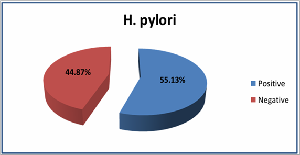
Figure 1: H. pylori positive and negative cases
Table 2: Clinical/endoscopic diagnosis
| Diagnosis | Number of Cases (n = 43) | Percentage (%) |
| Duodenal ulcer | 20 | 46.5 |
| Gastric ulcer | 10 | 23.3 |
| Chronic gastritis | 10 | 23.3 |
| Gastric carcinoma | 3 | 6.9 |
| Total | 43 | 100 |
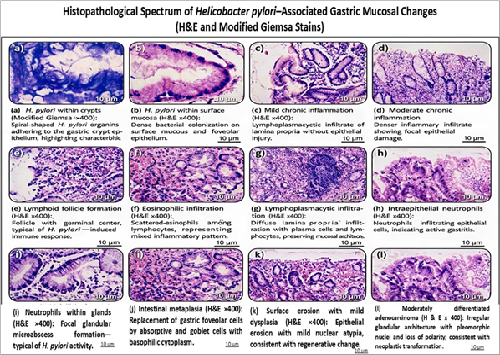
Figure 2: Histopathological Spectrum of Helicobacter pylori–Associated Gastric Mucosal Changes (H&E and Modified Giemsa Stains)
Table 3: Graded histopathological parameters
| Histopathological Parameter | Mildn (%) | Moderaten (%) | Markedn (%) | Totaln (%) | p-value (Chi-square test with finite corrections) |
| Chronic inflammation | 14 (32.6%) | 19 (44.2%) | 10 (23.2%) | 43 (100%) | < 0.001* |
| Neutrophilic activity | 15 (34.9%) | 18 (41.9%) | 10 (23.2%) | 43 (100%) | < 0.001* |
| Intestinal metaplasia | 10 (52.6%) | 7 (36.8%) | 2 (10.5%) | 19 (44.2%) | 0.034* |
| Mucosal atrophy | 4 (9.3%) | 1 (2.3%) | 0 (0%) | 5 (11.6%) | 0.745 |
| (*) = Statistically significant value (p value < 0.05 ) |
Discussion
The present study highlights the characteristic histopathological features of Helicobacter pylori–associated gastritis using the Updated Sydney System. Chronic inflammation and neutrophilic activity were observed in all H. pylori–positive biopsies, underscoring the organism’s central role in initiating and maintaining gastric mucosal injury. Similar findings have been reported by Mysorekar et.al, Chitralekha et.al and Dandekar et.al, as well as by Genta et.al, who described chronic inflammatory infiltrates as an almost universal feature of H. pylori infection [12-14].
A significant association between H. pylori infection and neutrophilic activity in this study reflects active gastritis. Crabtree et.al demonstrated that H. pylori induces cytokine-mediated recruitment of neutrophils, leading to ongoing epithelial damage [14]. Dixon et.al, Genta et.al, Yardley et.al and Correa et.al also emphasized neutrophilic infiltration as a key indicator of disease activity in the Updated Sydney System [15-18].
Intestinal metaplasia was identified in 44.2% of infected biopsies, supporting its role as a premalignant lesion in the gastric carcinogenesis pathway. Comparable observations have been reported by Rugge et.al, Farinati et.al, Baffa et.al, Di Mario et.al, Leandro et.al, Valiante et.al and Cardin et.al, and by Correa et.al and Piazuelo et.al, who described intestinal metaplasia as an intermediate step linking H. pylori infection to gastric carcinoma [15,19-21].
Mucosal atrophy was infrequent and showed no significant association with H. pylori infection in the present study. Sipponen et.al noted that glandular atrophy typically represents a later stage of chronic gastritis, which may explain its low prevalence in our cohort [16]. Similar findings have been reported in other Indian studies.
Conclusion
Helicobacter pylori infection is consistently associated with characteristic histopathological changes in the gastric mucosa, particularly chronic inflammation, neutrophilic activity, and intestinal metaplasia. The Updated Sydney System provides an effective framework for grading these changes and assessing disease severity. Histopathological evaluation remains indispensable for the diagnosis and prognostication of H. pylori–associated gastric pathology.
Declarations
Acknowledgements
The authors acknowledge the residents and faculty of the Department of Pathology, Government Medical College, Thiruvananthapuram, for their support.
Ethics approval and consent to participate
Approved by the Institutional Ethics Committee, Government Medical College, Thiruvananthapuram. Informed consent was obtained.
Competing interests
None declared
Funding Statement
None
Author Contributions
A.M. and A.A.C. conceptualized the study. A.M., D.M., and S.S. designed the methodology and performed statistical analysis. A.M. and A.A.C. collected data. D.M. and A.M. drafted the manuscript. S.S. supervised the study. All authors reviewed and approved the final manuscript.